Examples
Research Assistant
Create AI agents that search the web and synthesize information from multiple sources.
This example demonstrates how to build a research assistant that can search the web, gather information from multiple sources, and synthesize comprehensive answers.
Example Workflow
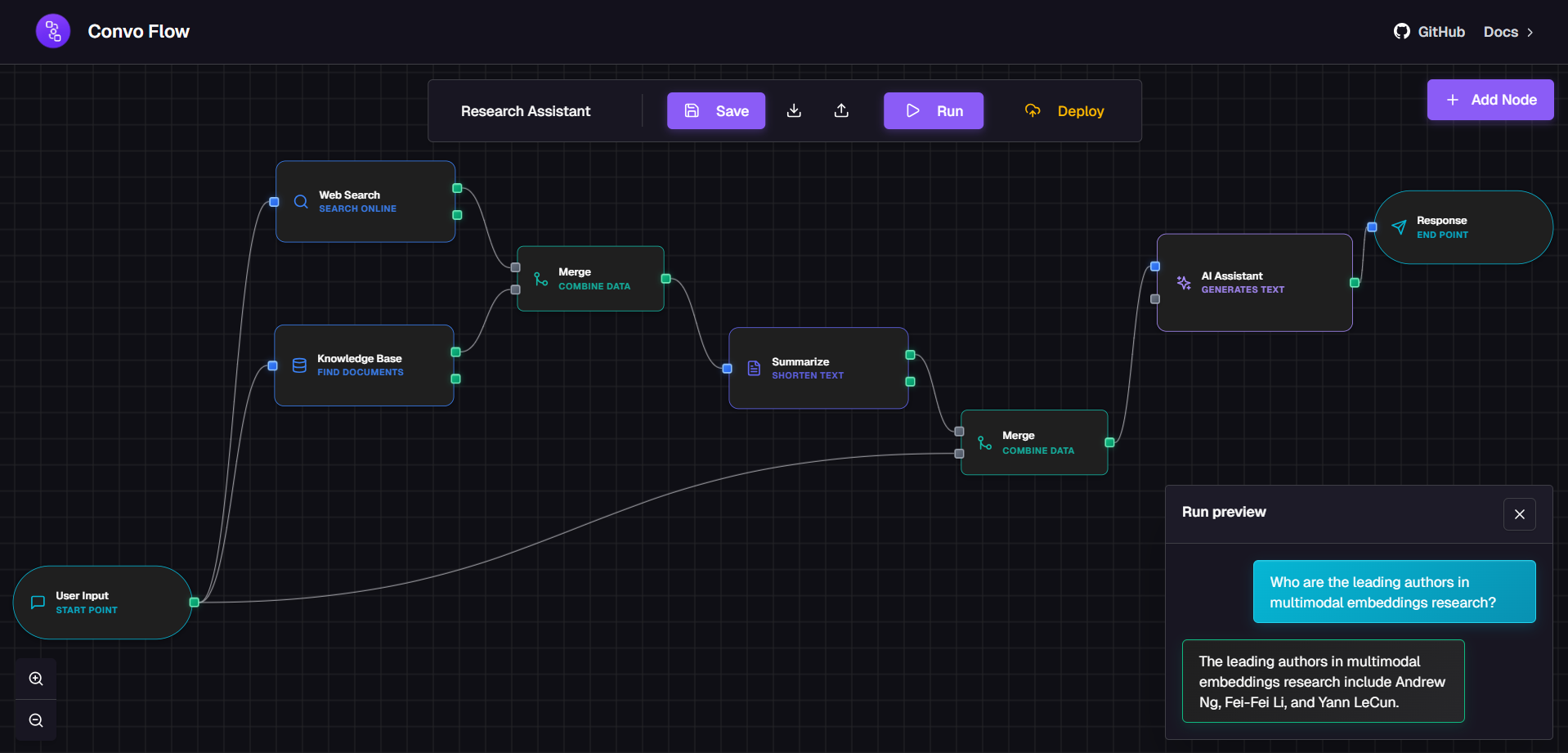
Here's an example of a research assistant workflow that searches and synthesizes information:
Key Features
- Web Search: Search the internet for real-time information on any topic
- Multi-Source Aggregation: Gather information from multiple web sources
- Information Synthesis: Combine and analyze information from different sources
- Source Attribution: Provide citations and links to original sources
- Comprehensive Answers: Generate detailed responses based on multiple data points
Workflow Components
- QueryNode: Captures research questions and topics
- WebSearchNode: Searches the web for relevant information
- ContentExtractionNode: Extracts and processes content from web pages
- MergeNode: Combines information from multiple sources
- LanguageModelNode: Synthesizes information into comprehensive answers
- ResponseNode: Returns the research findings with source citations
Use Cases
- Research current events and news topics
- Gather information about products and services
- Compare information from multiple sources
- Stay updated on industry trends and developments
- Answer questions requiring up-to-date information
Configuration Tips
text
Web Search Configuration:
  - Configure search API (Google, Bing, etc.)
  - Set number of results to retrieve
  - Filter by date, domain, or language

Content Extraction:
  - Set up web scraping parameters
  - Configure content cleaning and filtering
  - Handle different content formats

Information Synthesis:
  - Configure how to combine multiple sources
  - Set up fact-checking and verification
  - Define citation format

Response Generation:
  - Use prompts that emphasize synthesis
  - Include source attribution requirements
  - Configure response length and detail level
Best Practices
- Use multiple search queries to get comprehensive coverage
- Filter and rank sources by reliability and relevance
- Cross-reference information from multiple sources
- Always provide source citations for transparency
- Handle cases where information is conflicting or unavailable
Was this page helpful?