Examples
Intent-Based Routing
Classify user intents and route conversations to specialized workflow branches.
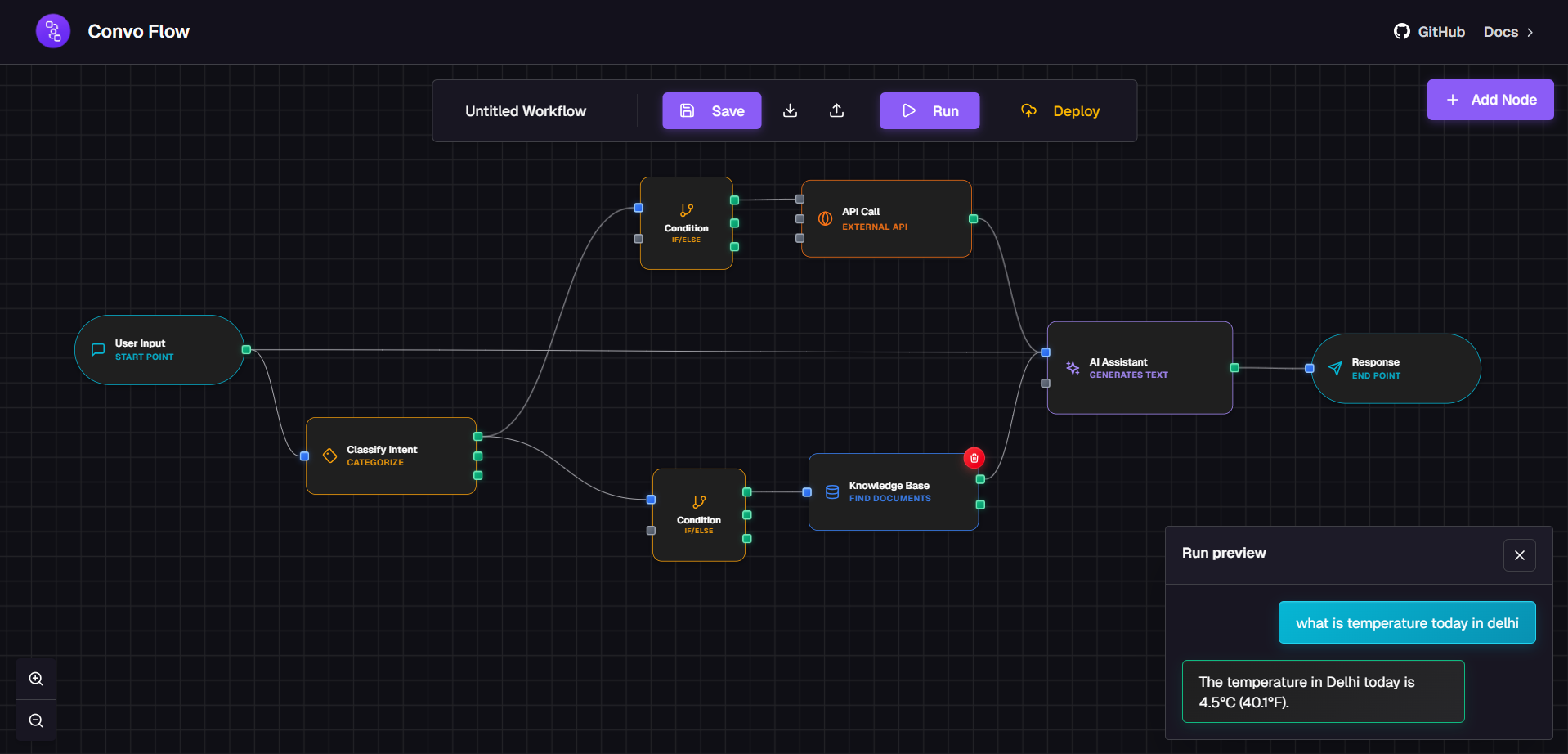
This example demonstrates how to build an intent-based routing system that automatically classifies user queries and routes them to specialized workflow branches for optimal handling.
Example Workflow
Here's an example of an intent-based routing workflow that classifies and routes conversations:
Key Features
- Intent Classification: Automatically identify user intent from natural language queries
- Smart Routing: Route conversations to specialized workflow branches based on intent
- Multiple Branches: Handle different intents with dedicated processing paths
- Fallback Handling: Manage unclear or unclassified intents gracefully
- Confidence Scoring: Use confidence thresholds to ensure accurate routing
Workflow Components
- QueryNode: Captures user queries and questions
- IntentClassificationNode: Analyzes the query to determine user intent
- ConditionalNode: Routes the conversation based on classified intent
- Specialized Branches: Different workflow paths for each intent type:
- Billing inquiries → Billing support workflow
- Technical issues → Technical support workflow
- Product questions → Sales/product information workflow
- General questions → General FAQ workflow
- ResponseNode: Returns the appropriate response from the selected branch
Use Cases
- Route customer support inquiries to appropriate departments
- Direct user queries to specialized knowledge bases
- Handle different types of requests with optimized workflows
- Scale support operations by automating routing decisions
- Improve response accuracy by using specialized processing paths
Configuration Tips
text
Intent Classification Setup:
  - Define intent categories (billing, support, sales, etc.)
  - Configure classification model or rules
  - Set confidence thresholds for routing

Intent Categories Example:
  - billing: Payment, subscription, refund questions
  - support: Technical issues, troubleshooting
  - sales: Product information, pricing, features
  - general: FAQs, general inquiries

Conditional Routing:
  - Map intents to workflow branches
  - Configure fallback behavior
  - Handle edge cases and ambiguous queries

Branch Configuration:
  - Each branch can have specialized nodes
  - Use appropriate knowledge bases per branch
  - Configure branch-specific prompts
Best Practices
- Start with a small set of well-defined intent categories
- Use training examples to improve classification accuracy
- Set appropriate confidence thresholds to avoid misrouting
- Implement a fallback branch for unclear intents
- Monitor and refine intent categories based on real usage
- Test routing logic with diverse query types
Was this page helpful?